
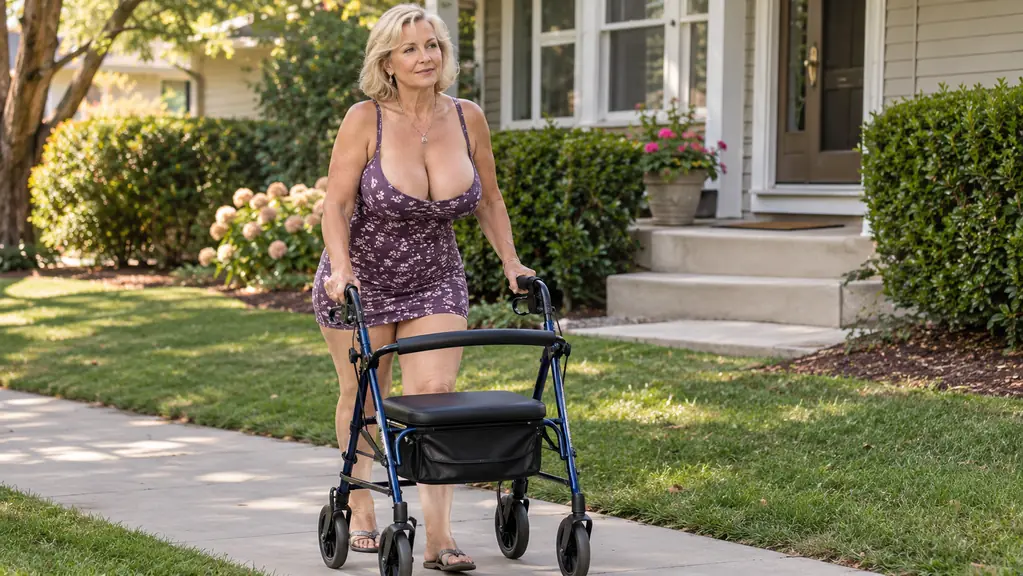
Two years ago I had my left knee replaced. The surgery went fine. The recovery was another story. For the first few weeks I leaned on a standard walker and felt every step of our hallway. My physical therapist kept saying the walker was a starting point, not a finish line, and after a while she was right. That is when I started looking at a rollator, and the one I kept coming back to was the Drive Medical Rollator Walker with Seat. I bought mine about 20 months ago, and it has been to the grocery store, the park, and the senior center more times than I can count.
I am Bernie, I am 72, and I live alone in a single-story house in Watsonville. I do not need a mobility aid to feel sorry for myself. I need one that lets me get to Mahjong on Tuesday, poker on Friday, and pickleball on Saturday morning without spending the whole trip watching the sidewalk. This review is about whether the Drive Medical rollator does that after nearly two years of real use, not after a weekend in the living room.
The Quick Verdict
A steady, comfortable rollator that has held up through 20 months of grocery runs, park walks, and Mahjong Tuesdays. The only real complaint is the 20-pound lift into the trunk.
Amazon Check Today's Price →The rollator that has earned its spot by my front door
After 20 months of weekly outings, this is the rollator I trust for grocery runs and senior center afternoons. See today's price and current reviews on Amazon.
Amazon Check Today's Price on Amazon →How I've Used It
My physical therapist cleared me to move on from the standard walker a few months after surgery. I did not switch overnight. For the first week I pushed the rollator around the living room, then down the hall, then out to the mailbox. The two steps up to my front porch were the test. The rollator handles them if I take them one at a time and use the brakes, and that was the moment I trusted it enough to take it to the grocery store.
Now it is my outing aid. It goes to the grocery store, the walk to the park, and the senior center on Mahjong Tuesdays. At the senior center I sit on the seat while I wait for the table to open. At the park I lean on it when I stop to talk. In the grocery store I use it to steady myself while I read labels. It is not a wheelchair and I do not pretend it is one. It is a walking aid with a place to rest, and that is exactly the job I need it to do.
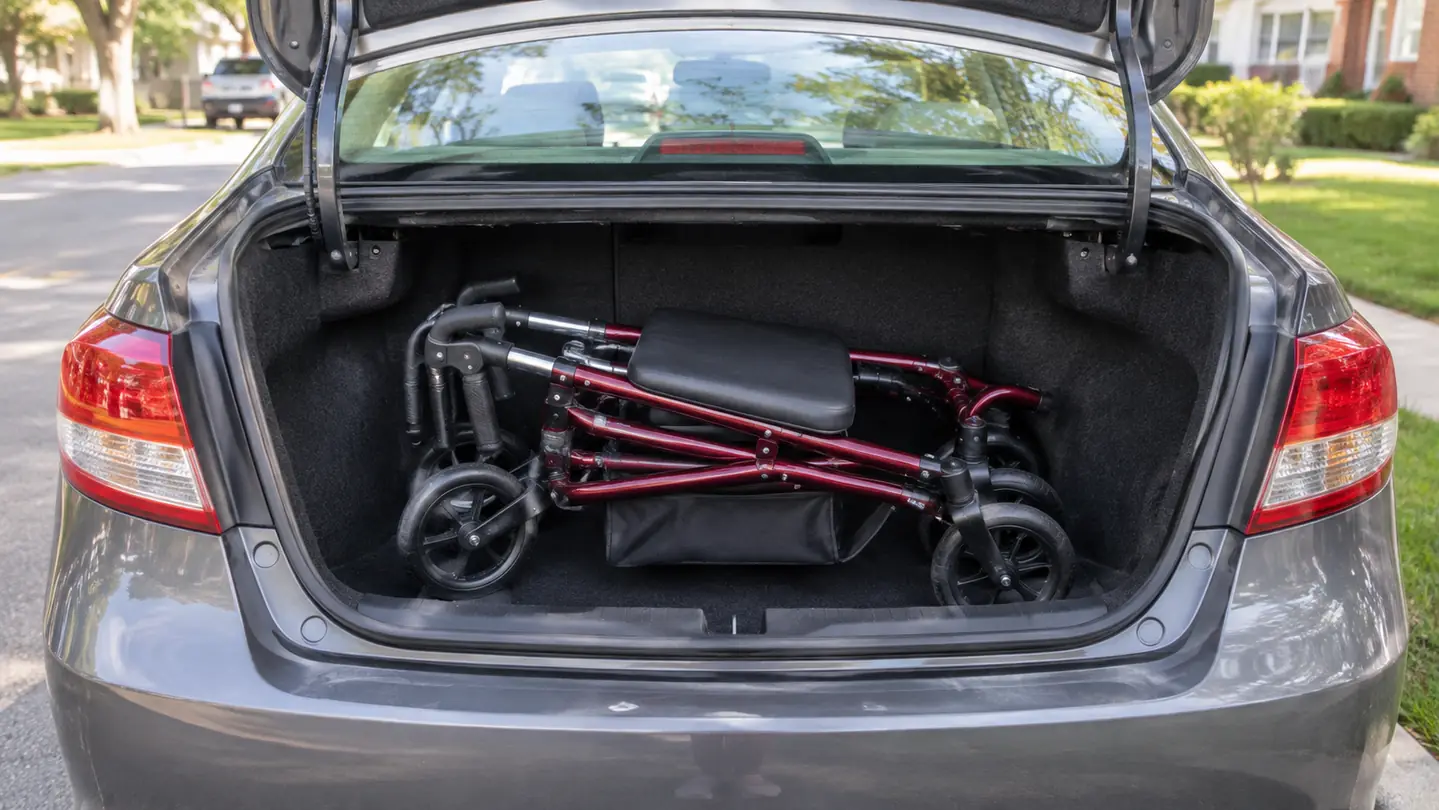
It folds up to go into the trunk of my small sedan. I will be honest: at 20 pounds, it is not a one-hand lift for me. Kathleen, my daughter, helps when she visits, and a neighbor helps when she does not. The folding part is easy. The lifting is the trade-off I accepted. I keep it in the corner by the front door, not in the garage. That matters. If it were hard to reach, I would not use it. Because it is right there, I grab it on the way out, and that is the whole point.

What the Rollator Does Well
The first thing I noticed was how steady it feels. The steel frame and the 7.5-inch wheels roll smoothly over the sidewalk cracks near my house. The hand brakes work the way they should: a gentle squeeze slows me down, and a firmer squeeze holds me in place when I need to wait. I do not have to death-grip the handles, which matters because my hands have some arthritis.
The height adjustment lever lets me set the handles where my physical therapist showed me. The listed maximum handle height is 35 inches, and that is more than enough for me. That sounds like a small thing, but it is the difference between walking tall and hunching. I set it once and have not touched it since. The lever is easy to reach, and I do not need tools to change it.
It also handles indoor and outdoor use without complaint. I roll it from the linoleum at the senior center to the concrete walk outside without any catching or wobble. The wheels are small enough to fit through my doors and big enough to handle the path to the park. I have used it in the rain once, and the wheels did not slip on the wet concrete.
The wheels have a smooth ride, but the brakes are the real reason I trust it on a slight downhill. I can ease down the ramp at the senior center without feeling like I am chasing it. That control is what made me stop worrying and start walking.
The Seat That Changed My Tuesdays
The seat is the reason I chose a rollator over a standard walker. At Mahjong, the tables fill up fast, and standing for twenty minutes is hard for me. With this rollator, I sit down on the seat, park it against the wall, and visit until my chair opens. The back support folds up and down, and I usually leave it up when I am sitting.
I have also used the seat at the park when I needed a rest halfway through a walk. It is not a lounge chair. It is a place to catch your breath for five minutes, and that is exactly what I needed. One afternoon I sat on it for ten minutes while I watched a pickleball game, and I was comfortable enough to stay for the next match.
One Tuesday, a friend asked if she could sit on it while she tied her shoe. I told her to go ahead. It held her fine, and we both laughed about how the rollator had become the most popular seat at the center.
Folding, Lifting, and the Trunk Question
The rollator folds by bringing the sides together, and the back support folds down. When it is folded, the listed dimensions are about 31.5 by 24.5 by 10.75 inches. That fits in the trunk of my small sedan with room to spare for a grocery bag. I do not have to take the wheels off or fight with any latches.
The weight is the honest catch. The listing says 20 pounds, and it feels like 20 pounds when I am lifting it into the trunk. I have learned to brace myself and use my legs, but on a tired day I ask for help. Kathleen can do it one-handed. I cannot. That is not a flaw in the rollator. It is a fact of my 72-year-old arms.
If you are shopping for a rollator and you will be lifting it alone every day, pay attention to the weight before you buy. For me, the steadiness on the ground is worth the heaviness in the trunk. Your trade-off may be different. I would still buy the Drive Medical rollator again, but I would buy it knowing that the trunk lift is part of the deal.
Small Gripes and How It Holds Up
No product is perfect, and this one has a few small gripes. The hand brakes need a firm squeeze, and on a long walk my arthritic hands get tired. I stop, rest, and carry on. The seat is firm, so I do not sit on it for longer than a few minutes at a time. Neither of these is a dealbreaker, but both are worth knowing before you buy.
The rollator is also not something I would take on loose gravel or a steep hill. It is built for smooth sidewalks, store floors, and park paths. I slow down on uneven ground and take the accessible route when there is one. That is not a complaint about the product. It is a note about matching the tool to the terrain.
After 20 months, I expected some rattles or a wobbly wheel. There are none. The steel frame still feels solid, the brakes still hold, and the folding mechanism has not loosened. I have not had to tighten anything or replace any parts. For a product that gets folded, unfolded, and rolled several times a week, that is a good record. The only maintenance I have done is wipe the frame down and check that the screws are snug. That takes two minutes. I am not handy, so if I can do it, anyone can.
The finish has some scuffs from the grocery store and the trunk, but that is normal wear. The rollator still does its job every single day, and that is what I care about. I would not say it looks brand new, but it does not look beaten up either. It looks like a tool that is used, which is exactly what it is.
What I Wish I Knew Before Buying
I wish someone had told me how much I would use the seat. I bought the rollator for the walking support, but the seat is what got me out of the house. Knowing that I can sit down anywhere for a few minutes makes a long outing feel doable. That confidence is worth more than any feature on a spec sheet.
I also wish I had practiced folding and lifting it before I needed to do it in a parking lot. The folding is easy. The lifting takes technique. Practice at home with a chair nearby, and you will save yourself a frustrating moment at the grocery store.
Saturday mornings I play gentle pickleball at the park with a few friends. The rollator comes with me. I park it by the bench, use it to walk to the court, and sit on the seat between games. Nobody looks at me funny. A few of them have asked about it, and one friend borrowed it for a lap around the park to see if her mother would like one. That is the part I did not expect. The rollator does not make me stand out. It makes me able to show up. I get to be the person at the table, on the court, in the conversation. The rollator is just the reason I can stay.
And one more thing: the 350-pound weight capacity is not something I need to test, but it is nice to know the frame is built for more than I will ever need. It makes the whole thing feel less fragile. One more note about the brakes: practice squeezing them before you go out. The first time I used the rollator, I squeezed too hard and stopped short. Now I know the feel, and it is second nature.
What I Liked
- Steady steel frame with 7.5-inch wheels that handle sidewalks and store floors
- Seat and fold-up back support make waiting at the senior center comfortable
- Height adjustment lever lets you set the handles to your exact fit
- Folds flat enough for a small sedan trunk
- 350-pound weight capacity leaves plenty of margin
Where It Falls Short
- 20 pounds is heavy to lift into a trunk alone
- Hand brakes require a firm squeeze, which is hard on arthritic hands
- Not ideal for loose gravel or steep hills
The day I sat on the rollator seat for a full Mahjong round without wishing I was home was the day it stopped being a medical device and became my ride to Tuesday.
Who This Is For
This rollator is for someone who is past the standard walker stage and wants to get out of the house. It is for the person who needs a place to sit while waiting, a steady handhold on uneven sidewalks, and a way to carry themselves to the places they love. If that sounds like you, and your doctor or physical therapist agrees a rollator is the right next step, this is a good one to consider. It has been the right one for me.
Who Should Skip It
Skip it if you cannot lift 20 pounds into a car trunk and do not have someone to help. Skip it if you need a seat for long stretches, because this seat is for short rests, not hours. And if you need someone to push you, you want a transport chair, not a rollator. Ask your doctor or physical therapist about fit before you buy, especially about handle height and brake reach. The right fit is the difference between a rollator you use and one you leave in the garage.
Still deciding? Start with the fit
Measure your doorways, test the brake grip, and check the current reviews on Amazon. The Drive Medical rollator has been my steady companion for 20 months, and it may be the right next step for you too.
Amazon Check Today's Price on Amazon →